


Economy of Despair: Making of India’s Developmental Reversal


India’s economic growth story increasingly sits alongside a less visible crisis: the weakening of the social foundations on which development depends. While headline economic indicators remain positive, the deterioration of public institutions and livelihood opportunities raises a more fundamental question: is India experiencing a reversal of its development trajectory? Recent government data on school education, presented in Parliament, does not augur well. Around 94,000 government schools have reportedly been closed across India, with Madhya Pradesh and Uttar Pradesh accounting for a large share of these closures. Overall, around 66 lakh children have dropped out of school in the last five years. Gujarat, a state often held up as a model of high economic growth, recorded a whopping 341 per cent increase in school dropouts between 2024 and 2025. Much of the analysis so far has emphasised state failure, administrative shortcomings and policy mismanagement in education. But these developments need to be situated within the larger economic malaise into which India has slipped over the past decade.
Is schooling no longer an essential social need?
When one of the authors conducted fieldwork in rural Tamil Nadu in 2018, upwardly mobile rural households, including Dalit households, viewed education as a priority. Schooling had become almost compulsory in their imagination of a better future. Parents were willing to take loans to send their children to private engineering colleges, often seeing higher education as the route out of manual labour and agrarian insecurity. Yet the optimism surrounding education that characterised the 2000s began to fade during the 2010s.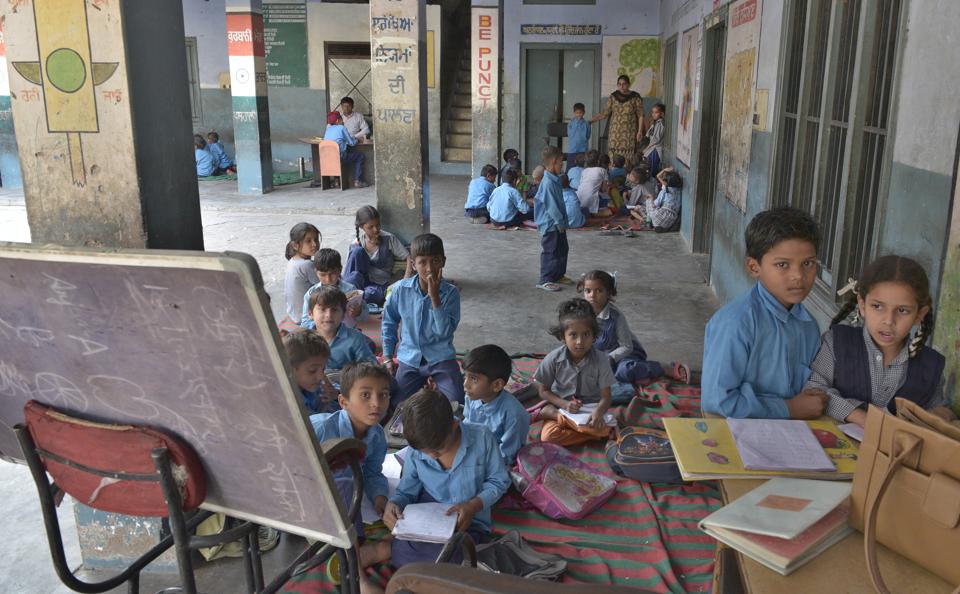 REPRESENTATIVE IMAGE | PHOTO : WIKI COMMONS
Young graduates and their families increasingly confronted a bleak labour market after completing their degrees. Consider the case of Ramesh, whom we met in 2018 in Tiruvannamalai district. His father, a weaver, had taken a loan of Rs. 5 lakhs to make his son an engineer. But the family was soon confronted with despair when Ramesh could not find the ‘office job’ they had imagined would follow his BTech degree. Unemployment was not an option for him as the loan had been raised by pledging their agricultural land. Ramesh therefore migrated to Chennai and took up work as an insurance agent, earning Rs.12,000 a month. Nearly half of his salary went towards his living expenses in the city, leaving him with very little to repay the loan.
His father's words captured the profound disappointment that lay beneath this experience:
“I didn't want my son to toil in the soil or in the loom. I sent him to school, enrolled him in engineering. But for what? Working in my loom here, I make considerably more money than what he could earn.”
The irony was striking. The father himself had once earned a decent income from agriculture, but the prolonged agrarian crisis had reduced cultivation to little more than a means of meeting the family's food requirements. The family's limited additional income came from weaving and his wife's participation in the MGNREGS. They were essentially surviving on these sources, with little or nothing left to save. Yet this economic hardship did not prevent him from educating his second child. His younger son was being sent to an English-medium school in the nearby town.
This persistence of educational aspiration is important. Despite economic hardship, the father continued to send his younger son to school because a social norm had taken root after decades of state intervention in education in Tamil Nadu, children were expected to be enrolled in school and finish at least 10th or 12th. As a member of a landowning dominant caste household, he was also responding to an emerging norm of providing children with a ‘respectable’ English medium education.
Among Dalit households, this transformation was perhaps even more significant. Migration to cities had given some households greater economic breathing space, and education had become central to their aspirations for social mobility. While most of their children were enrolled in government schools, some households could afford private English medium education. At the time of our fieldwork, all children below the age of 15 in the Dalit households we encountered were enrolled in school. Dalit women who had taken loans through self-help groups told us that a significant share of these loans was being used to meet the educational expenses of children pursuing higher education.
What we observed in rural Tamil Nadu in 2018 closely echoes what anthropologist Tanya Jakimow observed in her study in Telangana, which showed that education shaped how people understood their difficult livelihood conditions and the possibility of improving them. Even when educated youth faced disillusionment in the job market, the society at large continued to hope that education would lead to a better life for the next generation. Tanya Jakimow | PHOTO : WIKI COMMONS
Cut to 2026, in rural Chhattisgarh. One of us working in the villages of Dhamtari district observed a disturbing pattern of school dropouts, particularly among boys. Male students were leaving school before completing the 10th standard and taking up jobs in the urban informal sector. Kishan, aged 15, had dropped out after the 9th standard. When we asked him why he had left school, his response was revealing: “Padhai karke kya karega?” (“What is the point of studying?”).
Kishan's family was financially stable enough for him to continue his education. His withdrawal from school, therefore, was not simply a consequence of poverty or economic compulsion. Rather, he was responding to what he saw around him. He had watched people who had studied but continued to struggle to find employment, while those working as drivers or migrating to big cities appeared to be earning money relatively quickly.
This is not simply the story of Kishan and his family. A similar pattern is emerging in this village and in several villages around it: boys are increasingly dropping out of school, while girls are more likely to remain enrolled. What we are witnessing is the emergence of a new social perception, one that appears to be gaining wider acceptance in the region: that completing schooling offers little in return, and that, for a boy, it may be better to leave school and start working.
This marks a significant break from the past, when education was regarded not merely as a means of securing employment but as a social necessity in itself. This was certainly not the prevailing perception even five years ago. We spoke to several schoolteachers in the area who confirmed that school dropouts have been increasing over the past few years. Yet they also cautioned against explaining this trend simply in terms of changing aspirations or the economic circumstances of families.
As one teacher put it:
“Students are not dropping out simply because of the economic hardship of their parents. Nor is it solely because they do not see a future in education. In many cases, it is also due to the institutional failure to build basic learning foundations. By the time students reach higher grades, these gaps hinder their ability to learn and make schooling increasingly burdensome for them.”
What appears, therefore, as a growing rejection of education among rural families may also reflect the failure of the educational system itself to make schooling meaningful, accessible and capable of sustaining children through the higher grades. The weakening of educational aspirations may thus be both an economic response to declining returns to education and an institutional response to the deteriorating quality of schooling itself.
While there is considerable distance between Tamil Nadu and Chhattisgarh, both in their social environments and in their sub-national welfare architecture, the comparison between them points to a common lesson: consistent state investment and sustained political commitment can create social norms that reproduce and reinforce development.
The situation in rural Chhattisgarh, at least in the villages we visited, is a cause for concern. As our interviews with schoolteachers suggest, the increase in dropouts has become particularly visible over the past few years. What we may be witnessing, therefore, is not simply an increase in school dropout but a weakening of the social norm that made schooling appear necessary and unavoidable. This change is significant because when families begin to doubt that schooling can improve their children's lives, and when the education system itself fails to provide meaningful learning, the foundations of mass education itself begin to weaken.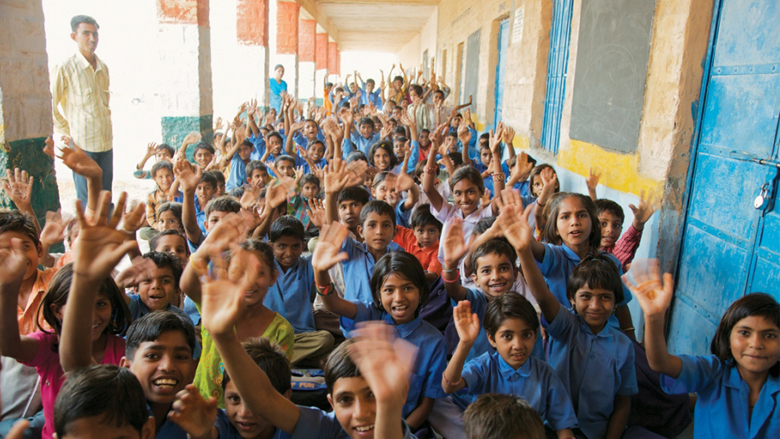 RPRESENTATIVE IMAGE | PHOTO : WIKI COMMONS
Making of a Deeper Malaise
While there is clearly a crisis of underinvestment and policy neglect in school education across several North Indian states, the developments we have described also point towards a deeper malaise in the Indian economy over the past decade. The expansion of school enrolment was not simply the result of improvements on the supply side. Creating a social demand for education was equally important. The state played a crucial role in building trust among rural populations and establishing schooling as an essential social need. The expansion of education was therefore not merely about constructing schools or increasing enrolment; it was also about creating the social expectation that children should be in school and that education would contribute to a better future.
If the trend we observe in rural Chhattisgarh is becoming widespread — if families are increasingly losing faith in education as a pathway to a better life — then something is fundamentally wrong with the growth model we have been pursuing, and perhaps with the vision of development that underpins it, if there is one at all.
As studies show, education has generally improved across the world, even in contexts of stagnant incomes and persistent poverty, at least when measured through indicators such as enrolment. From this perspective, the simultaneous deterioration of school education in India, both in terms of the state's capacity to provide quality education and the weakening social demand for schooling, represents a deeply troubling development. It suggests not merely a failure to expand human capabilities, but a possible erosion of the social foundations that sustain and reproduce development itself.
This is also indicative of a wider and largely silent economic crisis taking shape in India. A persistent employment crisis has become increasingly visible, including through recent student protests over jobs and recruitment. The Indian economy has struggled for years to generate sufficient non-farm employment for a growing working-age population. What distinguishes the past decade, however, is not simply the persistence of this structural problem but the succession of major shocks imposed on an already fragile employment landscape. Demonetisation and the implementation of GST disrupted large sections of the informal economy, while the pandemic dealt another severe blow to the working-class livelihoods.
The cumulative effect of these shocks in an environment of inadequate employment opportunities can extend well beyond income and consumption. It can begin to alter the very social norms that were created to enable development. When education no longer appears to lead to secure employment, when parents see little reward for sending their children to schools, and when immediate informal work appears more attractive than investing in years of education, the social compact around schooling begins to weaken.
The weakening of this norm cannot be separated from the broader erosion of social protection and employment security. The dismantling of MGNREGS, which has provided an important source of employment and income security for rural households, risks deepening an already fragile rural economy. Persistent economic insecurity can have ratchet effects on the social conditions that enable development: once households begin to abandon educational aspirations, reduce investment in children's schooling or prioritise immediate survival over long term human development, rebuilding those aspirations may be considerably harder.
The deeper danger, therefore, is not simply that India is failing to create enough jobs or provide adequate schools. It is that the economic conditions and public institutions that once made development socially imaginable are themselves beginning to weaken. What is at stake, then, is not merely the future of education, but the social contract and the promise of development itself.
(C.R.Yadu: Assistant Professor at the School of Liberal Studies at BML Munjal University, Haryana. Kavita Yadaw: PG student in public policy at the same university)