


Going Back to the Future: Small-Scale Fisheries as Living Utopias


When I first began working with small-scale fishing communities along the coast of Kerala in the 1970s, their world was very different from what we see today. Canoes and catamarans sliced quietly through the surf, propelled by paddles or sails. Nets were woven and repaired in the shade of coconut groves, while songs of the sea accompanied the rhythms of labor. Fishing was not merely an occupation; it was a way of being ecological, cultural and spiritual.These fisheries were precarious in many ways. Livelihoods were modest, incomes uncertain, and lives vulnerable to the vagaries of the monsoon. Yet there was balance with the sea, with each other, and with time itself. Communities knew where to fish and when to stop. They had an intimate, almost instinctive grasp of species cycles, tides, and lunar phases. There was little surplus wealth, but neither large-scale ecological destruction. Looking back from today’s vantage point, it feels almost like a utopia one that was never recognized as such because it lived in humble, everyday forms. REPRESENTATIVE IMAGE | WIKI COMMONS
From the 1980s onward, this world was dramatically disrupted. Motorized craft, trawlers, and synthetic gear, coupled with policies that privileged exports and industrial fleets, transformed fisheries into liquid mines. The industrial logic of “bigger is better” promised abundance but instead delivered ecological ruin and social dislocation. Bottom trawlers bulldozed sea-beds; selective gear gave way to indiscriminate extraction; short local chains were replaced by long global ones. Fish became a commodity to be shipped abroad, rather than nourishment for nearby communities. What was once a shared, moral economy of the commons giving way to privatization, debt, and dispossession.
And yet, the small-scale fisheries of the Global South did not vanish. Often pushed to the margins, they survived and in surviving, revealed something extraordinary. They are not relics of a bygone era. They are a living utopia: prefiguration of an ecological society where sustainability, equity, and cultural continuity are woven together.
Take their vernacular ecological knowledge. Generations of observation, encoded in local languages, songs, and taboos, tell fishers which reefs are nurseries, which winds bring certain species, and which months require restraint. This is not “backwardness,” but a knowledge system as rigorous as formal science, though carried in memory, ritual, and practice.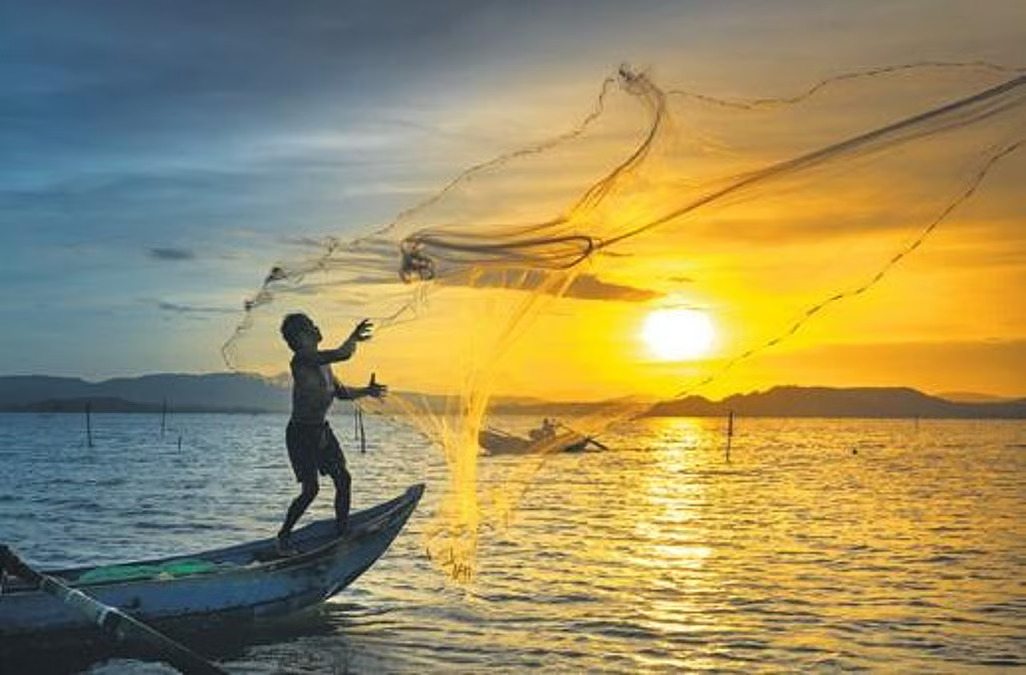 REPRESENTATIVE IMAGE | WIKI COMMONS
Consider their convivial technologies. Small, selective gear cast nets, stake nets, hook-and-line, shore seines are not designed to maximize extraction but to work with nature. Their catches are seasonal, species-specific, and often low-impact. These technologies conserve biodiversity by design, ensuring that ecosystems are not depleted but renewed.
Or their energy efficiency. A kilo of fish harvested by SSF has a fraction of the carbon footprint of industrial fleets. With minimal fossil fuel dependence, these fisheries embody the climate-resilient food systems the world so desperately needs.
Economically, SSF is not insignificant. They supply the bulk of fresh fish consumed locally in many coastal regions. Their short value chains bring nutritious, affordable protein to nearby populations, bypassing the waste and inequity of globalized trade. Women play central roles drying fish, managing sales, sustaining household economies. Far from exclusionary, these livelihoods are inclusive, weaving entire families and communities into their fabric.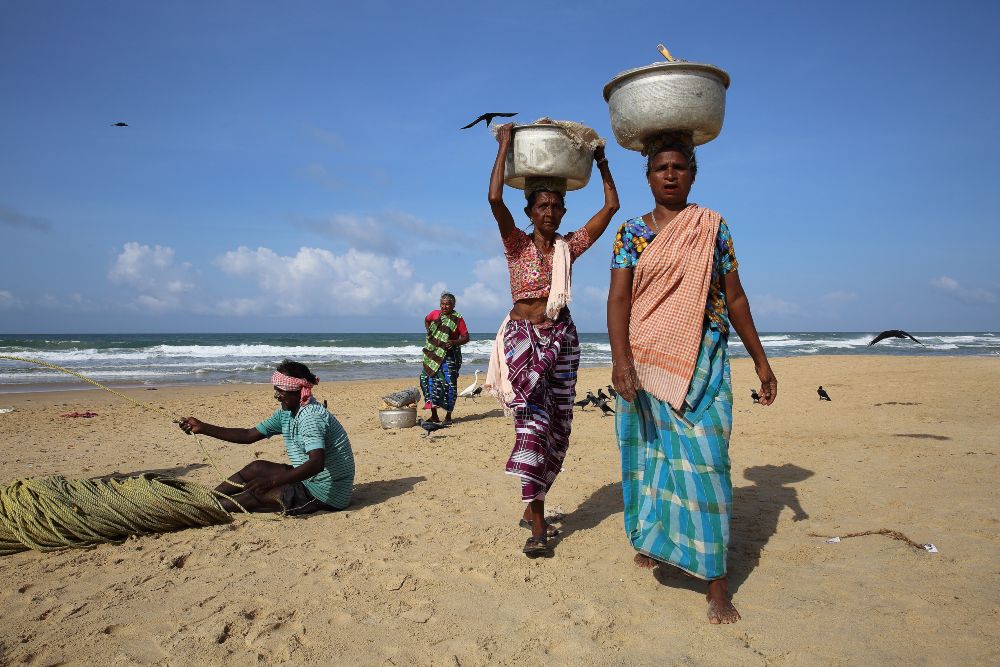 REPRESENTATIVE IMAGE | WIKI COMMONS
Most striking is the moral economy of the commons. For small-scale fishers, the sea is not a warehouse of commodities but a shared lifeworld. Rights to fish are customary, negotiated, and embedded in community norms. Stewardship, not ownership, guides practice. This ethos of mutuality of taking only what can regenerate is what has allowed SSF to endure for centuries.
When I recently revisited these reflections, I found them resonating deeply with the ideas of Murray Bookchin, the social ecologist who argued that the ecological crisis is at its root a crisis of society. Bookchin critiqued hierarchy, gigantism, and industrial capitalism’s obsession with endless growth. In their place, he imagined decentralized, directly democratic communities living in harmony with ecological limits. His principles decentralization, non-hierarchy, mutual aid, post-scarcity, unity in diversity read like a philosophical mirror of what I had witnessed in Kerala’s coastal communities decades ago.
Where Bookchin condemned gigantism, small-scale fisheries demonstrate the intelligence of the human scale. Where he called for decentralization, SSF communities are already practicing localized governance of their commons. Where he insisted that abundance need not mean overproduction, SSF showed how short value chains and low-carbon harvests can feed millions. Where he hoped work could become meaningful again, fishers with their skills, risks, and collective rhythms reveal that labor can indeed carry the dignity of craft. MURRAY BOOKCHIN | PHOTO : WIKI COMMONS
So what does it mean, then, to speak of “going back to the future”? It does not mean a nostalgic return to the poverty or vulnerability of the 1970s. It means retrieving the wisdom of that time, the knowledge, practices, and moral frameworks that made balance possible and reimagining them in a world facing climate collapse, industrial overreach, and social alienation. It means modernizing our politics and economics around the logic of small-scale fisheries, rather than forcing them to conform to the logic of industrial extraction.
To do so requires bold steps: ending subsidies for destructive fleets, banning trawling in tropical waters, empowering SSF cooperatives, and legally recognizing customary fishing rights. It means valuing fish as nourishment, not just as commodity; amplifying fisher knowledge in policy-making; and supporting convivial technologies that work with, not against, aquatic life.
Utopia is not an unreachable dream. It already exists in the boats, nets, markets, and songs of small-scale fishers across the world. Their lives remind us that another way is possible: not gigantism, not extraction, but community, reciprocity, and resilience. If we can learn from them, defend their rights, and scale their logic in solidarity rather than size, then perhaps we can indeed “go back” not to the past as it was, but to a future rooted in its wisdom.
The sea, in this sense, is not just a site of livelihood. It is a mirror of the possible.