


Kolkata’s Parameswaran Thankappan Nair

Kolkata, the ‘tilottama’ (paragon of beauty) city, indeed had her ranks of admirers but only a few were as enchanted by her as its own historian P. Thankappan Nair. One wonders when he reached this bustling city in his early twenties in 1955 all the way from Ernakulam, if he had anticipated how the next six decades would unfold in his beloved metropolis. He was admittedly enamoured by the antique buildings and forgotten alleys and streets, vestiges of this old city, at his first encounter that kindled his curiosity about her bygone days. It only seems expected that a fervent lifelong scholarship with such a mammoth corpus of 62 books and around 600 essays mostly on this city would turn a person into a legend, especially to the curious students of history. Even in 2010s, they would often find him flipping through the pages of newly printed books at the office of Firma KLM, that has brought out much of his major works including the much acclaimed ‘A Tercentenary History of Calcutta’ volumes around 1986-87, and even more frequently at premises of the National Library. They must have heard and whispered to each other the known stories about his enormous collection of a more than 3000 books on Kolkata with a rare complete set of the Bengal Past and Present, at his place in Kansaripara Road, or his famous bush shirts and vintage Remington typewriter.Yet he was seldom celebrated within the purview of academic history.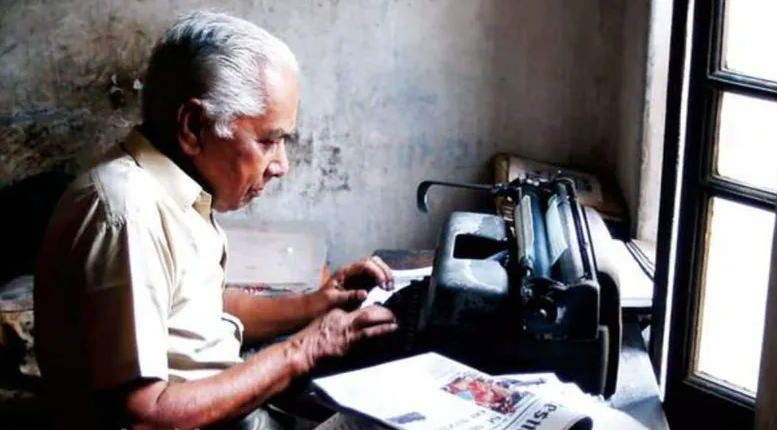 P. Thankappan Nair | PHOTO: WIKI COMMONS
Nair remained an ardent archivist, a meticulous compiler of old maps and texts and his deep empirical sense about the subject made him wander across the city, diligently putting times in their places that bore its fruit in his thousand pages magnum opus, A History of Calcutta’s Streets (1987). Any curious student of Kolkata’s urban history deeply immersed into the oeuvre of Radharaman Mitra, Shree Pantha, Purnendu Patree or Sumanta Banerjee, Nishith Ranjan Ray and Sukanta Chaudhuri, would find Nair quintessential for mapping the terrain of this study, if not for the significant complex history that this city hides under its quotidian hubbubs. Nair was among the few who had found the heart and the discipline of this city, deep within its fluctuating landscapes around 1970s-80s. Beyond the enduring academic obsession with colonial period, he could traverse up and down the creeks of time to know his ‘Calcutta’ ever more intimately as evident from his meticulous compilations on Calcutta in seventeenth and eighteenth centuries from the documents available at Fort St. George, the British Museum and India Office along with other old libraries in and around Kolkata. Similar to the urban landscape, the landscape of the discipline of history has also witnessed major turns and revisions that eventually brought his seemingly unreflective approach to the archive under the scrutiny. However, his ‘South Indians in Kolkata’ (2004) remains a strong testament to his reflexivity, where he considered himself part and product of the history of persistent cultural contacts and migration that he had been reconstructing, and not merely as a distant inspector. Nair who had never been ‘schooled’ in history, found his expression in the
rigour of former empirical archival methods, as vestiges of what this discipline once was. Clearly, he preferred both his beloved city and the subject in their old moorings, antique just like his Remington.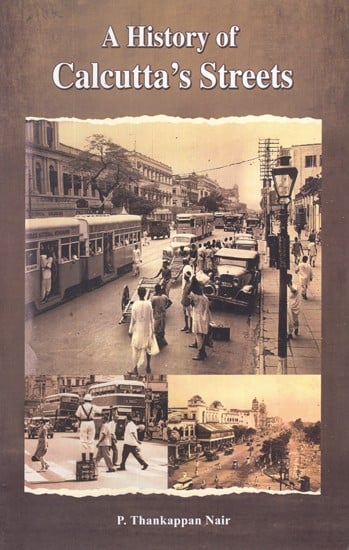 REPRESENTATIVE IMAGE | WIKI COMMONS
Nair in his passing this year has left a significant void in the domain of public history that would probably take considerable time to replenish. His slim prose without much academic liabilities may have lost its parlance, but it is the culture of his rigorous empirical work with such singular focus for many decades that seems to be fading quite fast as well. More than the monumental corpus, it is the vintage empirical practices of knowing the city first-hand that helped Nair to find his niche among the academic greats such as, Hari Vasudevan, Kuruvilla Zachariah, and L.K.Ananthakrishna Iyer in the memories of young history students of this city. The emerging literature on urban landscapes with its focus on ecological changes and the production of the social spaces across the lines of caste, class, gender and religion has justifiably transformed the discourse of urban history, but the legacy of Thankappan Nair would remain in providing the indispensible empirical blueprint for the same. At a time when propagandist narratives about the past became an excuse to demolish historical monuments and sites in the name of majoritarian belief, communal narratives were fabricated as history, it is his love for the relics of past, his legacy of nurturing of history with care, and the footsteps of this ‘barefoot historians’ treading across the libraries and old bookshops for the search of facts that this generation of students have to follow.