


Sand to Stone: How Seawalls Are Swallowing Kerala’s Coast

Each year, as Kerala's southwest monsoon returns with roaring waves and trembling skies, the script is painfully familiar. Families living along the coastline brace themselves. Homes are battered. Shorelines retreat. And, almost reflexively, the call goes out for more seawalls.
Yet what appears to be a demand for protection is turning into a slow-motion disaster. In my years of working along the Kerala coast—beginning with Marianad in the early 1970s—and later in tsunami-ravaged Aceh (2007–2011), I have seen how the choices made after disasters, shape entire generations. Today, Kerala stands at such a crossroad.
The Vanishing Coast
Kerala once had 600 km of golden, continuous beach. Today, barely 200 km remain. The rest has been replaced by grey stone and tetrapods—much of it blasted out of the fragile Western Ghats. A kilometer of seawall now costs ₹47 crore, while relocating 100 fishing households to safer, inland plots near the sea, can cost as little as ₹30 crore. Yet budgets, politics, and public perception continue to favour hard structures.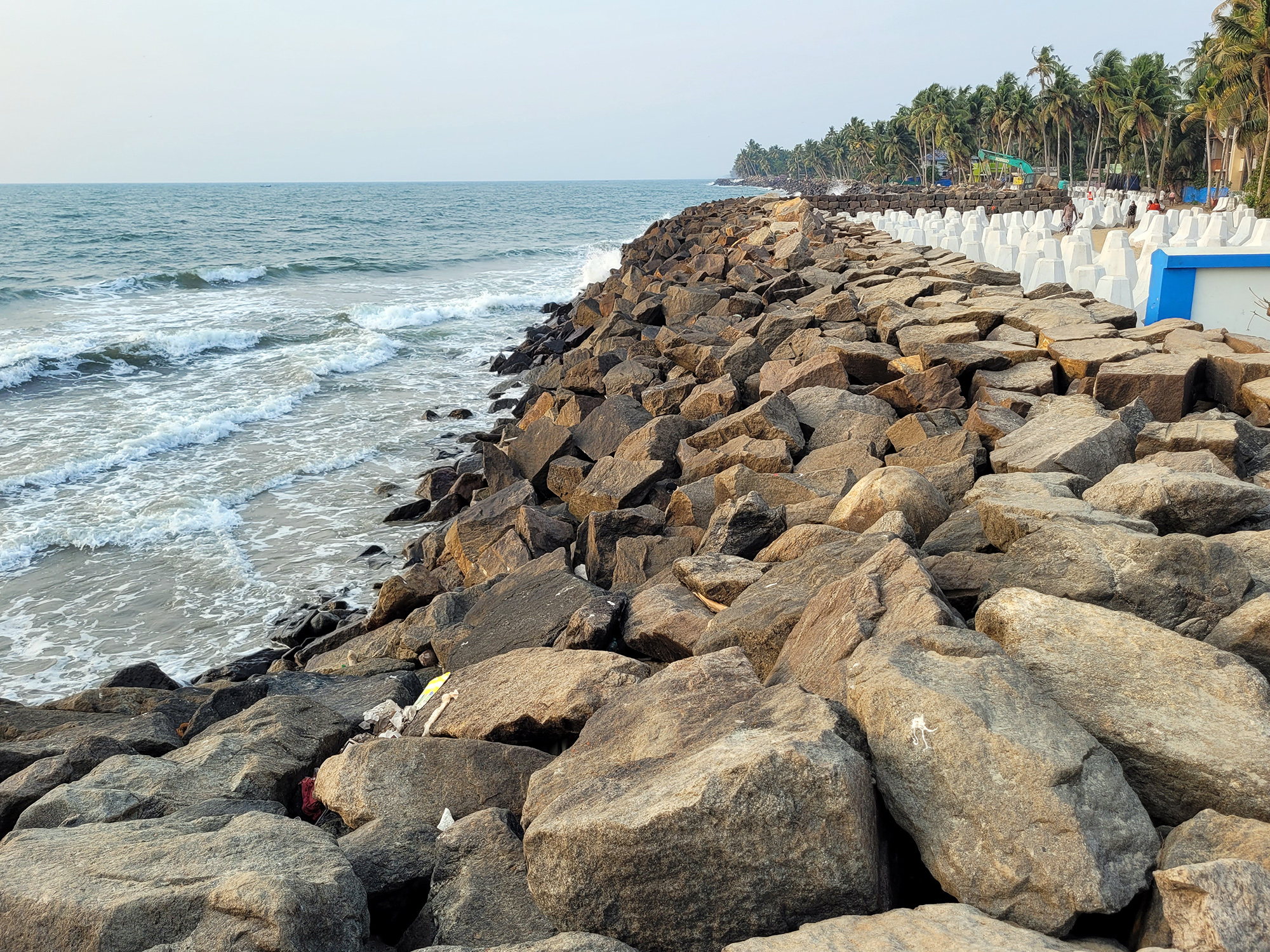 REPRESENTATIVE IMAGE | PHOTO : WIKI COMMONS
In 2023, I coordinated a citizen-led report by the Janakeeya Padana Samithi (JPS) titled Our Beaches, Our Sea: Heritage of Fishing Communities, Usufruct of All Citizens. We found disturbing patterns across districts:
“Seawalls are sinking and getting damaged. Depth immediately seaward is increasing due to scouring, inviting higher waves to break closer. These changes are not reflected in satellite shoreline analyses. Slumping walls, overtopping waves, and beach disappearance go unrecorded.”
This is not just a technical oversight—it is a systematic erasure of evidence. “This is not protection,” one expert told me. “It is engineered exclusion.”
Whose Shore Is It Anyway?
The costs of this engineered exclusion fall disproportionately on Kerala’s fishing communities. Most are artisanal fishers who land their catch on the beach. Walls cut off beach access. Floods still come, often worsened by overtopping. But support rarely does.
Says Thresiamma, a fisherwoman from Anchuthengu: “When the waves climb over the wall and into our home, nobody comes. But they come quickly to build the next wall.”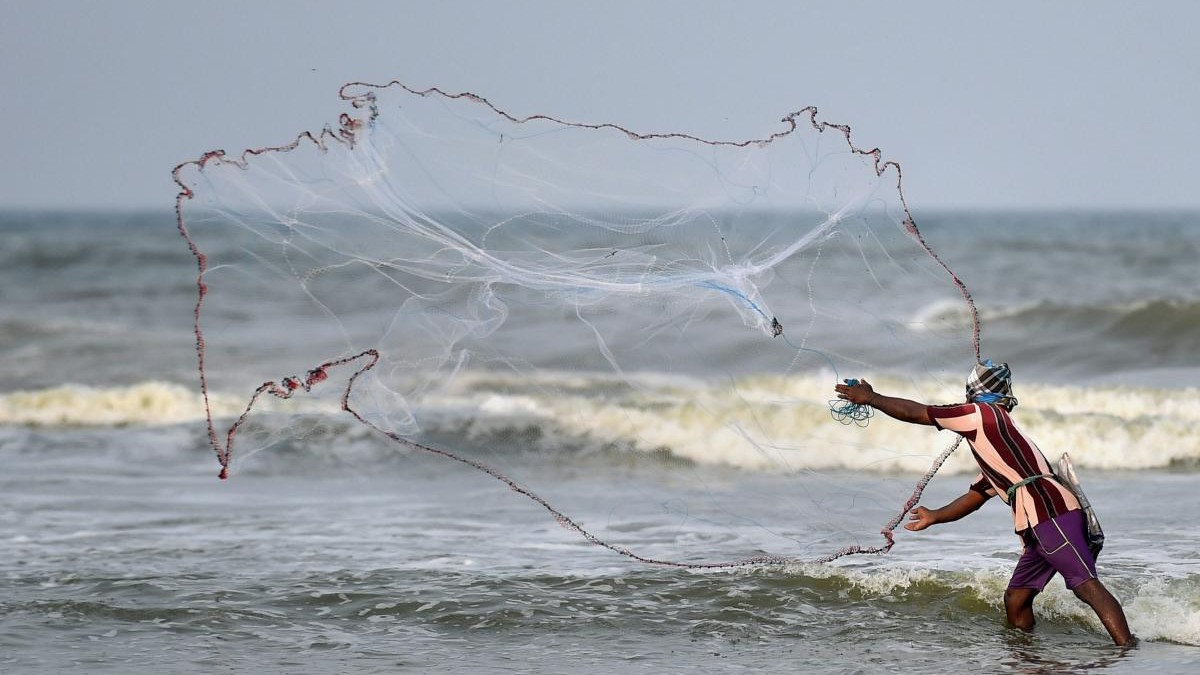 REPRESENTATIVE IMAGE | PHOTO : WIKI COMMONS
Meanwhile, roads and resorts just inland get the lion’s share of protection. As Sulaiman, a fisherman from Chaliyam, puts it: “The sea does not scare us. It is what people do in the name of saving us that we fear.”
Lessons from Marianad—and Aceh
From 1973 to 1977, I worked with the fishing community in Marianad, a village founded in the 1960s by Bishop Peter Bernard Pereira. The Bishop’s idea was a visionary response to the congestion and dangers faced by coastal fishers in Thiruvananthapuram’s southern fishing villages. Sixty families were resettled on land, east of the coastal road, in planned housing with individual compounds. Today, Marianad is a thriving, resilient community of more than 1000 households.
This is not surrender to the sea—it is strategic retreat. A Marianad-style model, scaled up, could resettle 10,000 families across Trivandrum District for less than the cost of a district-wide seawall.
Similar thinking guided my work in Aceh, Indonesia after the 2004 tsunami. There too, rebuilding efforts focused not just on restoring what was lost, but creating safer, more sustainable communities—often by listening to traditional wisdom.
Japan’s Cautionary Tale
In 2012, I visited Japan’s tsunami-hit Otsuchi-cho in Iwate Prefecture. Despite a history of tsunamis, and a monument warning against building below a certain line, the town had grown downward over decades. When the 2011 tsunami struck, thousands died, including the mayor leading evacuations.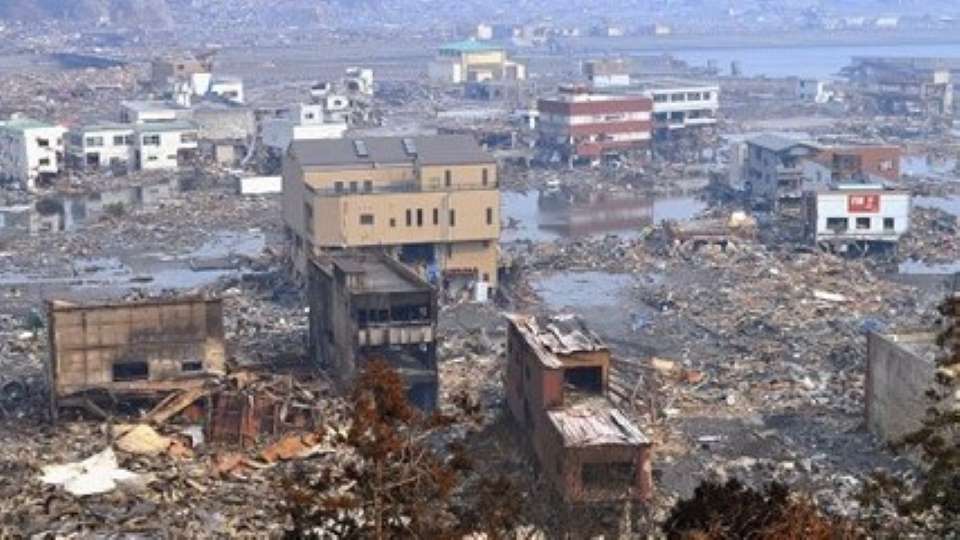 TSUNAMI HIT OTSUCHI-CHO | PHOTO : WIKI COMMONS
Japan’s response involved immense engineering: 10-meter-high seawalls were erected along many coasts. But communities were split. Many felt the walls erased the ocean from view—and memory. As one Japanese survivor put it: “They built a wall so tall, we can no longer see the sea we loved.”
Global Lessons: What the World Is Learning the Hard Way
The growing literature on coastal degradation—such as the book The Last Beach by Pilkey and Cooper—echoes what communities are already living: walls fail in the long run.
In the US, hardened coastlines have led to beach starvation and sharp drops in tourism revenues.
In Indonesia and Sri Lanka, post-tsunami natural buffer zones with mangroves and sand dunes outperformed concrete defenses.
A World Bank report notes that beach tourism declines dramatically when seawalls are built, with annual losses running into hundreds of millions.
The trend is clear: once a beach is lost, it rarely comes back. And when the beach goes, livelihoods, rituals, and resilience go with it.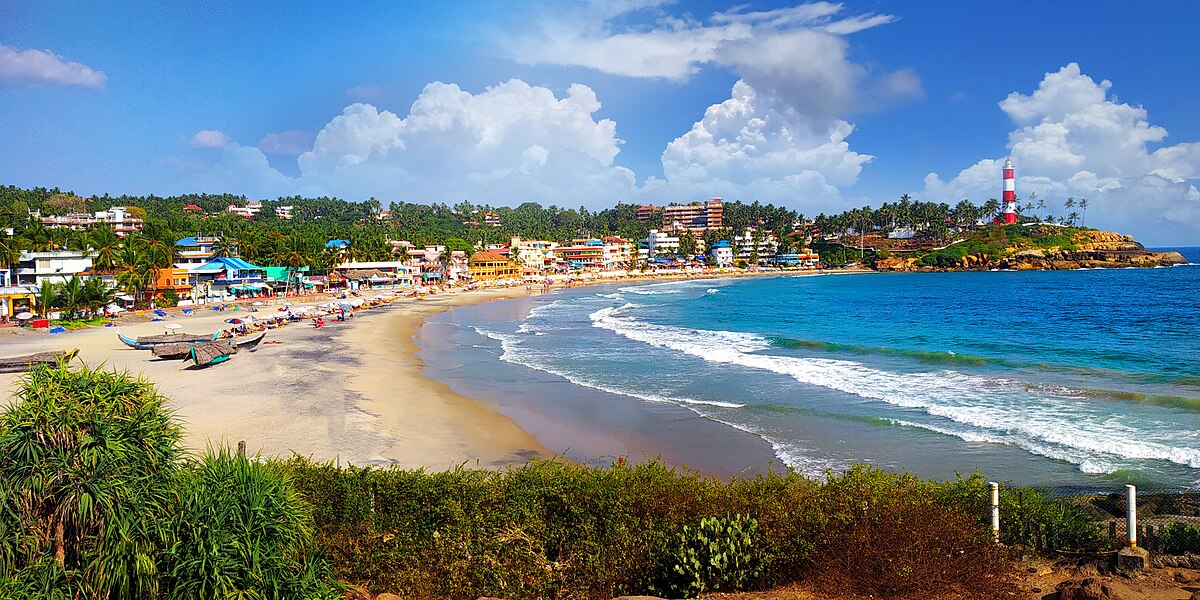 REPRESENTATIVE IMAGE | PHOTO : WIKI COMMONS
What Must Change
Kerala’s approach to coastal management must be turned on its head. We need:
A moratorium on new seawalls.
A Coastal Community Housing Fund to enable voluntary, dignified relocation.
Strict no-development zones within 200 meters of the high tide line, reserved for public and fisher use, without permanent construction.
Promotion of living shorelines—vegetated dunes, mangrove belts, and natural buffers.
We must also challenge the political economy that profits from stone. As geographer Ramesh Ramachandran notes: "Every meter of seawall is a contract. Every contract is a political constituency."
A Coastal Pact for the Future
I believe the time has come for a people’s alliance—fishers, scientists, religious leaders, youth, planners, and beachgoers—to demand a different future. One that protects people, not just property.
The sea gives. The sea takes. But it is we who decide how we live beside it.
As the late Patrose Gomez of Marianad once told me, “A beach is the playground of the sea. It is best we leave it that way.”
Let us listen. Before it is too late.